
On Duvets for Those Who Sleep Warm
This post contains affiliate links. As an Amazon Associate, I earn from qualifying purchases.
There is a particular misery to waking at three in the morning, one foot cautiously searching for cool air, the rest of you stubbornly trapped beneath a well-meaning duvet. You are not cold enough to throw it off, and not comfortable enough to stay put.
Most people assume the trouble lies with their sheets. In practice, it is almost always the insert.
A good duvet should feel like air with manners: present, orderly, and easy to forget once the light goes out.
Why so many duvets sleep hot
Most modern duvets are designed with enthusiasm rather than restraint. Too much fill, synthetic shells that do not breathe, and “cooling” claims that fade quickly all contribute to the same restless night.
Hotels solve this problem elegantly. They use lighter inserts, allow the room temperature to do the work, and rely on proportion rather than bulk. The bed looks finished, but never oppressive.
This approach works just as well at home.
How to choose, without overthinking it
Before buying anything, ask yourself three simple questions:
Do you sleep warm all night, or only when falling asleep?
Do you prefer weight, or do you prefer air?
Is your bedroom temperature reasonably consistent?
Your answers matter more than branding, price, or thread counts.
Duvets that behave themselves
Below are the types of inserts that reliably work for warm sleepers. Each has been chosen for breathability and good sense rather than novelty.
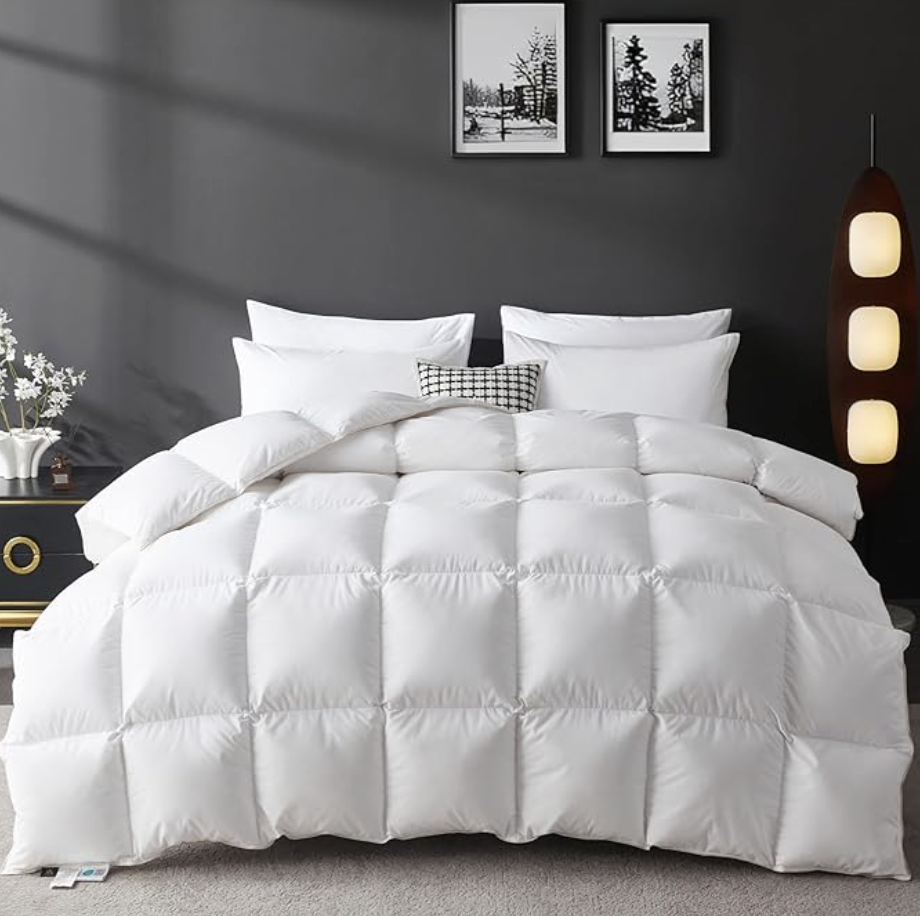
A lightweight down-alternative insert
For those who want the bed to look proper, without feeling enclosed.
If you want a duvet that looks full and orderly inside a cover, but does not insist on holding heat, a lightly filled down-alternative insert is often the most forgiving choice.
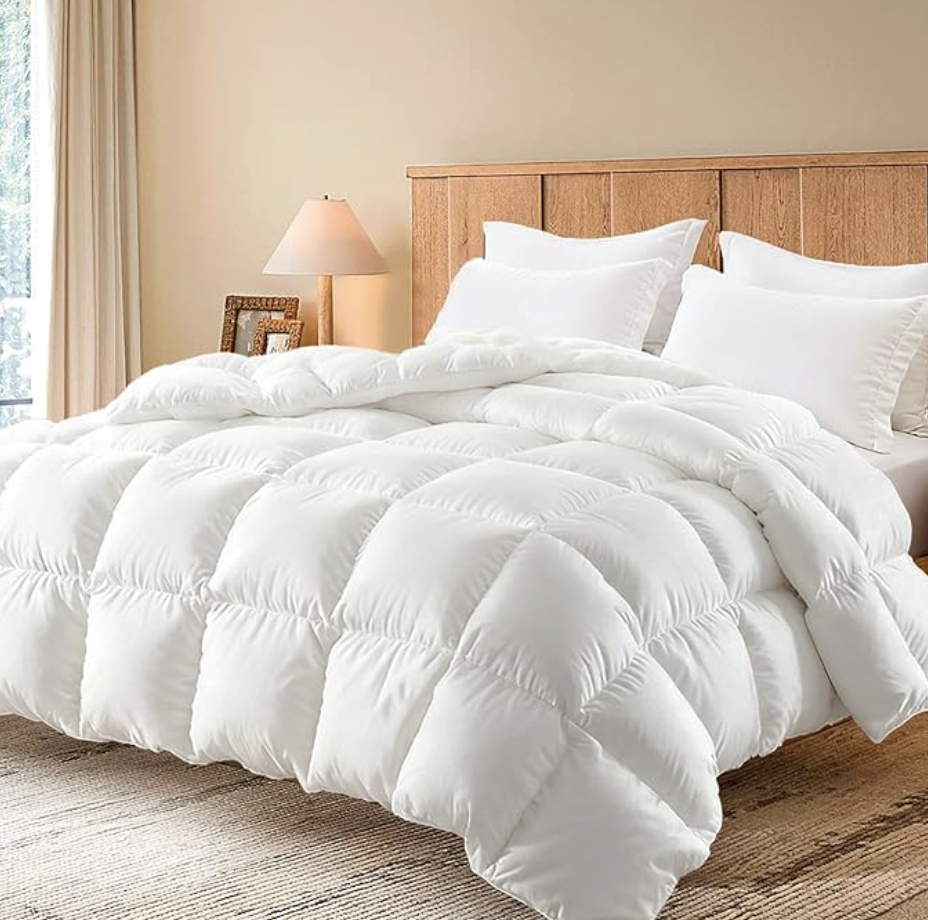
A restrained all-season insert
For those who dislike flatness but still sleep warm.
“All-season” only works if the fill is modest. Avoid anything described as plush or oversized. The right version offers presence without bulk.
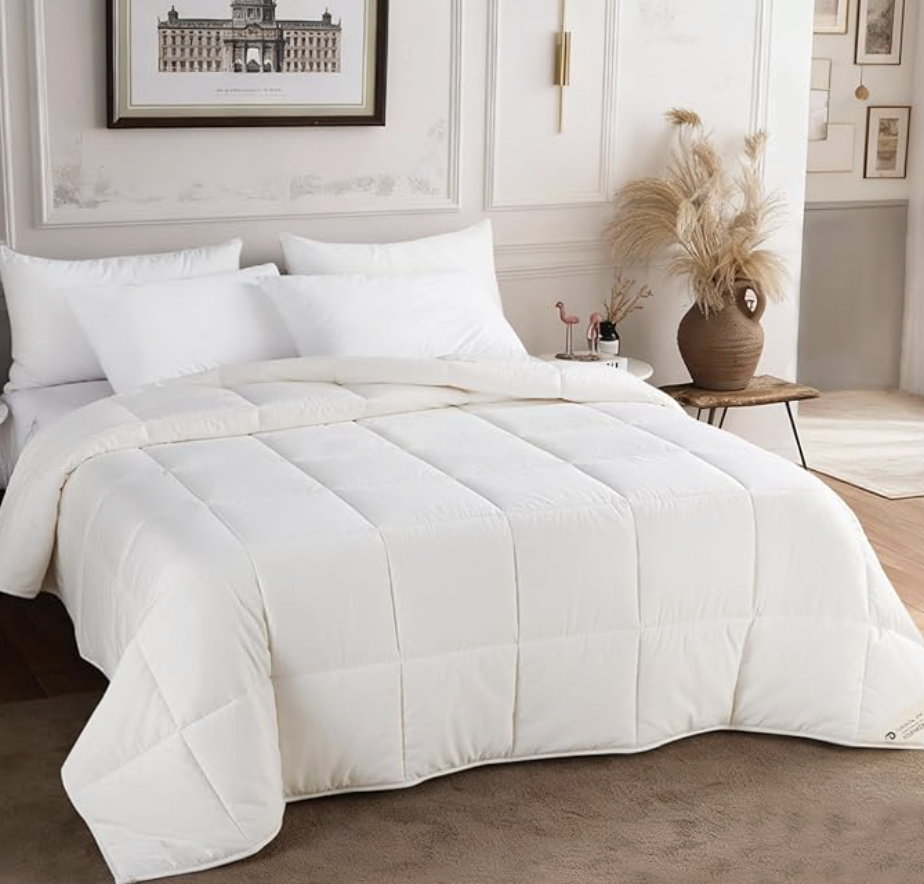
Wool or silk
For those who wake warm rather than simply uncomfortable.
Natural fibers regulate temperature quietly and release moisture instead of trapping it. They are particularly helpful if you tend to wake damp or overheated.
A well-made option, especially for persistent warmth: Ultra-Soft Wool Duvet, $114.99
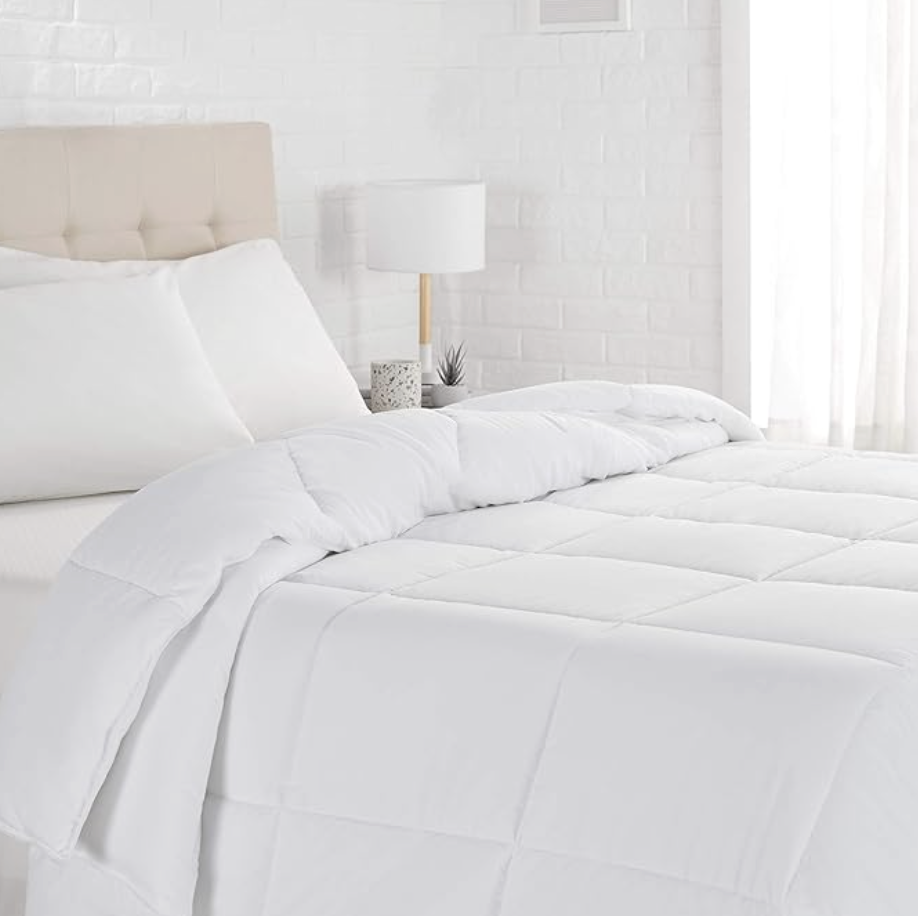
A modest, practical option
For guest rooms, lighter budgets, or uncomplicated needs.
There is no shame in a simple insert so long as it is not overfilled. Restraint matters more than luxury.
A plain, workable choice: Amazon Basics Duvet Insert, $26.99
What to leave on the shelf
Cooling gels, excessive loft, and anything designed to “trap warmth for winter” rarely serve a warm sleeper, regardless of the season.
The most effective duvets are rarely the most exciting ones.
A final note
If you find yourself pushing the duvet aside each night, then pulling it back out of habit, the problem is not indecision. It is excess insulation.
You do not need to replace everything at once. A single, well-chosen change is usually enough.
If your bed still feels warm after this adjustment, the weave of your sheets often matters just as much — a subject worth considering next.
